SUMMIT One Vanderbilt Accessibility: Wheelchairs, Elevators and Mobility
See prices From 42 EUR · Free cancellation available
Contents
SUMMIT One Vanderbilt accessibility is a question I want to answer carefully, because a wrong assumption costs a real person their day. The short version: the visit begins with an elevator ride to the 91st floor, which is a good sign for many visitors with limited mobility, but I cannot confirm current arrangements. Here is what I’d actually do: read this guide for planning, then confirm the details with the venue before you pay.
I have not visited, and I will not claim to have checked anything on site. Everything below comes from the ticket details and from sensible planning. For the full visit, see my SUMMIT One Vanderbilt observation deck guide.
Is SUMMIT One Vanderbilt wheelchair accessible?
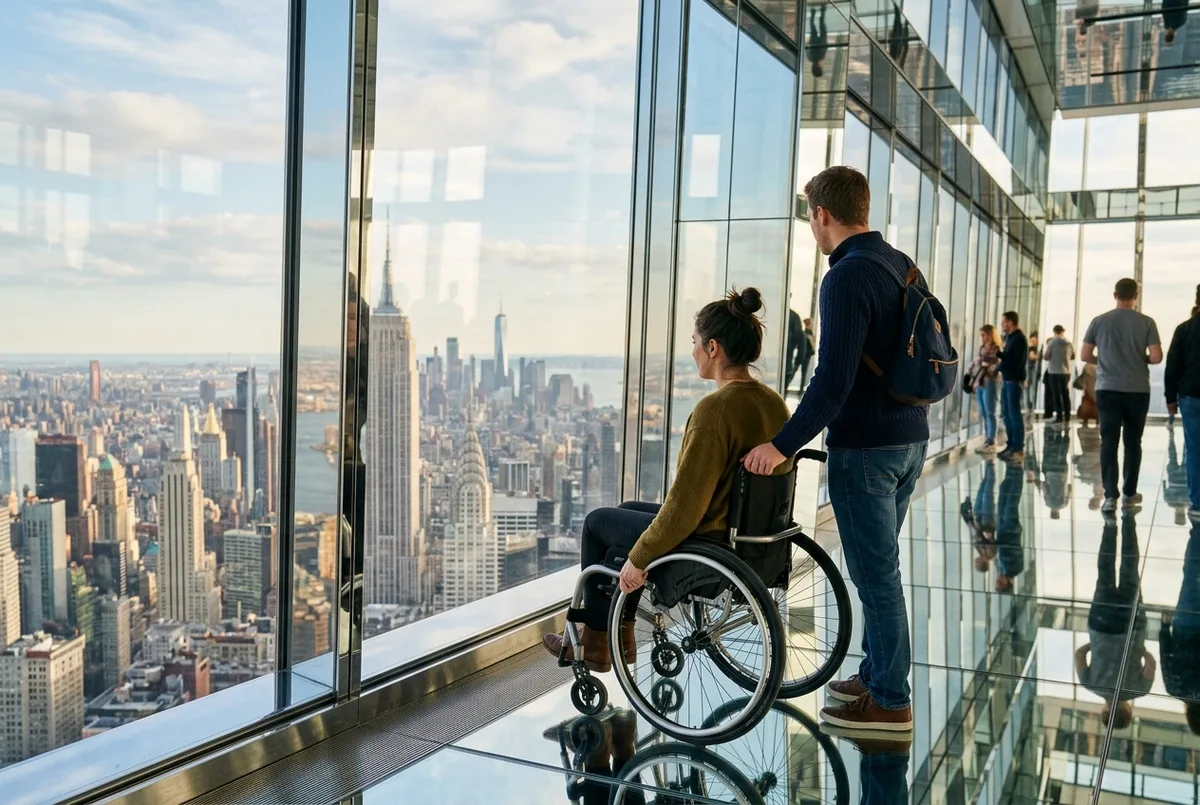
The ticket details describe a sensory elevator ride to the 91st floor, and the experience then spreads across the 91st, 92nd and 93rd floors. Lifts are a good starting point for a wheelchair visit, but I cannot say whether every space, ledge or terrace area is step-free.
I would not book on an assumption. The right move is to check the official SUMMIT site or contact the venue with your specific needs, such as chair width, whether the glass ledges are reachable, and how the terrace is accessed. I’d rather you spend ten minutes on that than arrive and be disappointed.
Check prices & dates
Ready to visit?
Book your tickets in advance: popular time slots sell out.
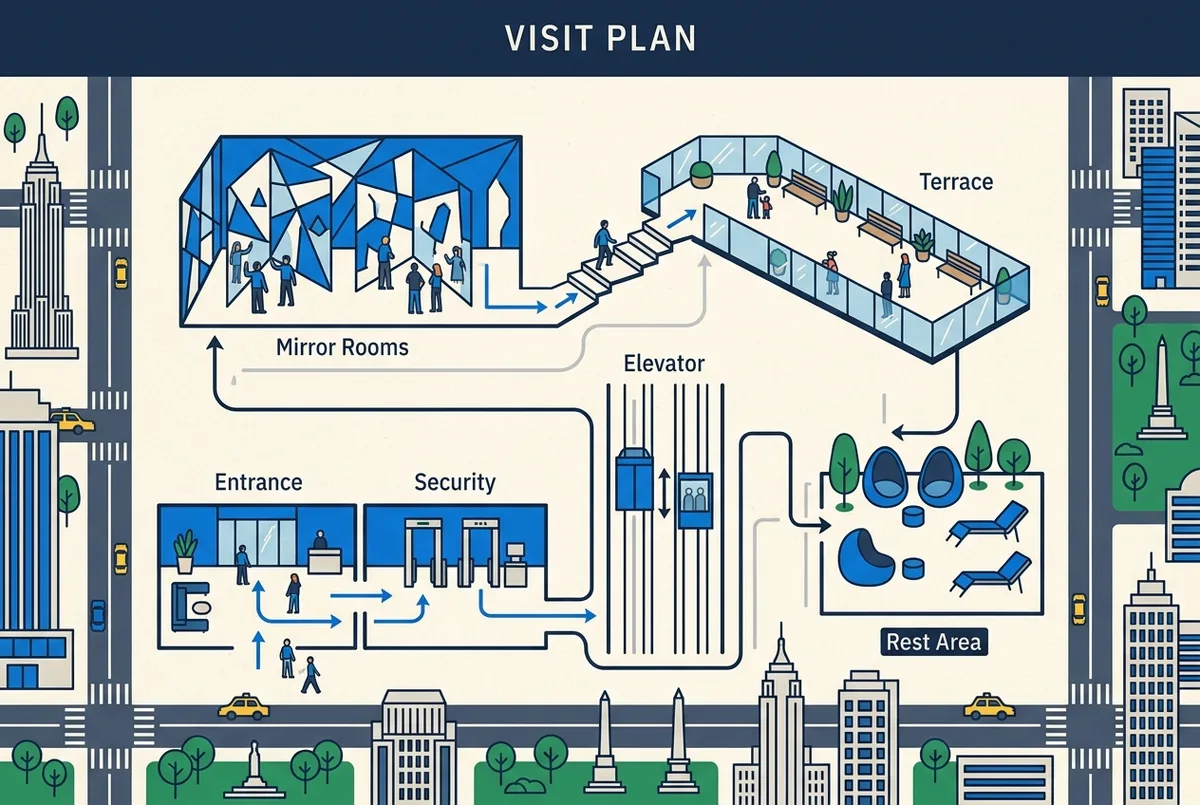
The entrance is inside the One Vanderbilt tower beside Grand Central Terminal in Midtown. You check in, pass security, then ride the elevator up. The listing says the ride takes under a minute.
The walk to the door is the part I would plan most carefully. Grand Central is a huge station, and distances inside it add up. My address, entrance and directions guide explains the approach. I’d choose a taxi or a private car for the last stretch if walking is tiring.
What about the glass ledges and mirror rooms?
Levitation has two glass ledges hung about 1,063 feet above Madison Avenue, according to the ticket details, and the AIR rooms use floor-to-ceiling mirrors. Both are physical, visual spaces that can be hard for some people.
For mobility, the question is the access route and the queue. For balance, mirrors can disorient you, and my glass floor and mirror rooms guide explains what to expect. My view is that you can have a full visit without stepping onto the ledge, so the ledge should never decide whether you go.
How long will the visit take?
Most visitors spend around 90 minutes to two hours, per the listing. If you move more slowly, or need rests, I’d plan for two hours or a little more and choose a quiet slot.
Crowds change everything for mobility. Mirrored rooms fill up fast at midday and around sunset, and the photo queues grow with them. An early weekday slot is the calmest option, and that is where I would put my money if you have a flexible schedule.
What should you confirm before you book?
I would confirm five things with the venue or on the booking page:
Step-free routes from the entrance to every floor you want to visit.
Wheelchair and mobility aid rules, including size limits and whether you can use your own chair throughout.
Access to the terrace and the glass ledges, since these are the places most likely to have limits.
Seating and rest spots, if you tire easily.
Companion or carer arrangements, and any ticket rules around them.
That list is my advice, not a promise of what exists. Answers can change, and only the venue can give you current ones. I would also save the reply or a screenshot in case you need it on the day.
Is there seating on the deck?
I cannot say how much seating there is, and I will not guess. The listing describes an Apres cafe and bar, and I would expect some places to pause there, but confirm it rather than trust me.
My tip is to plan rests into your visit anyway. Build a break after the mirrored rooms and before the terrace. If you want food or a drink, my restaurant and cafe guide explains what is described on the deck.
Can you bring a stroller, a walker or a mobility aid?
Rules on strollers and mobility aids can change, so check the official site. For families, my SUMMIT One Vanderbilt with kids guide covers strollers and timing from a family angle.
I’d bring the aid you rely on and not a substitute. A visit is only good if you feel safe and in control, and unfamiliar equipment makes both harder. If you need to fold or store something, ask before arrival.
Is the private transfer worth it for mobility needs?
Only in specific cases. The private transfer product places a driver between your Manhattan address and the deck, and the listing says the driver helps with luggage or mobility needs. It also says it suits wheelchair users, elderly relatives, small children with gear or larger groups, in cases where the car removes real stress.
It is also the most expensive way to visit, at about EUR 1,045 from as of 2026-09-21, and the price may vary. The visit itself is the general admission version. My honest view: consider it if the trip to the door is the hard part, and skip it if you can already reach Midtown comfortably. You can see the private transfer option and check what it covers.
What should you ask when you contact the venue?
Keep the message short and specific, because a clear question gets a clear answer. Say the date you plan to visit, how many people are coming, and what mobility aid you use. Then ask the five questions from the list above, one by one.
I’d also ask what the quietest time of day is, since the venue will know its own patterns better than any guide. If you get an answer you are unsure about, ask again in different words. My view is that a good venue will be glad to help, and that a vague reply is itself a useful piece of information about how much you can rely on the visit.
How should you plan the day around the visit?
Treat the deck as the main event and keep everything else easy. Choose a hotel or a meeting point close to Grand Central if you can, eat a light meal beforehand and book your slot for a time when you are usually at your best. Leave the afternoon after the visit free, so a tired body does not turn a good morning into a hard day.
I would also build in a buffer at each end. Arrive early so check-in and security do not feel rushed, and do not schedule anything tight afterward. Comfort is the whole point, and the deck will still be there if you need a slower pace.
What if someone in your group dislikes heights or crowds?
Access is not only about wheels and stairs. Some visitors need calm, quiet or a way out. The terrace and the mirrored rooms still give a full visit even if you skip the ledges, and a weekday morning slot is quieter.
I would agree a signal with your group for “I need a break”. That small plan does more than any gadget. For more on timing and other practical points, my tips page has a checklist.
Which ticket should you book?
For most visitors who need access, I’d book general admission for a quiet slot, after you have confirmed access with the venue. It covers the three floors, the installations, the glass ledges, the bar and cafe and the terrace, and it starts from about EUR 42 per person as of 2026-09-21. Prices may vary by date and time slot.
The official SUMMIT site and your booking confirmation are the only sources I trust for access details. For background on the tower, the One Vanderbilt article on Wikipedia is a neutral starting point, though it will not give you access rules.
I would also make contact before you travel, not on the morning. Early answers give you time to adjust your plan, and that matters far more than any tip from me.
My recommendation on SUMMIT One Vanderbilt accessibility
Confirm first, book a quiet slot second, and treat the ledges as optional. The elevator start is encouraging, but I would not call the venue accessible on my word alone.
If you want to see the full ticket range before you decide, the SUMMIT One Vanderbilt home page lists everything. Then use the questions above and go with confidence.
FAQ
Is SUMMIT One Vanderbilt wheelchair accessible?
The visit starts with an elevator to the 91st floor, but I cannot confirm current arrangements. Check the official site or contact the venue before you book.
Are there elevators at SUMMIT One Vanderbilt?
Yes. A sensory elevator takes visitors up to the 91st floor, and the ride takes under a minute, according to the listing.
Do you have to use the glass ledges?
No. You can skip Levitation and still enjoy the mirrored rooms and the terrace.
How long does the visit take?
Most visitors spend around 90 minutes to two hours. Allow extra time if you need rests.
Is there a service that helps with mobility needs?
The private transfer product says the driver helps with luggage or mobility needs. Check the booking page for the current details.
SUMMIT One Vanderbilt Tickets: General Admission Day or Night